By clicking "Subscribe", you confirm that you have read and accepted our Terms and Conditions, Privacy Policy and Cookie Policy.
Access to music is a fundamental part of a well-rounded childhood, supporting creativity, confidence, and personal development. Yet for many children, opportunities to engage with music remain limited.
The United Nations Convention on the Rights of the Child highlights the importance of education in developing every child’s personality, talents, and abilities. This includes access to creative subjects such as music, which play a vital role in emotional, social and cognitive growth.
However, despite its recognized benefits, access to music education remains unequal. For many families, the cost of music lessons, instrument hire, and tuition makes participation difficult. At the same time, music provision in schools continues to face challenges, reducing children's opportunities to engage in meaningful musical experiences.
When access to music is limited, children miss out on an important form of self-expression and learning. This is particularly true for those in underserved communities or with additional needs.
Creating more opportunities for children to interact with music - freely and without barriers - is essential.
One solution is to bring music into shared outdoor spaces.
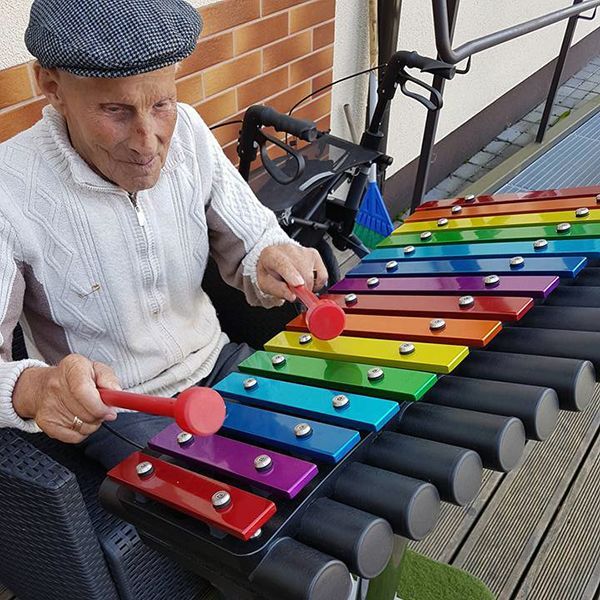
Percussion Play’s vision is to make music accessible to all by placing musical instruments in the great outdoors. By integrating instruments into parks, playgrounds, school grounds, trails and community spaces, children can discover and create music naturally as part of their everyday play. This approach:
Outdoor instruments create opportunities for children to experience the physical, emotional and social benefits of music, regardless of background or experience.
Marshall Cohen, Executive Director and Co-founder of the Lift For Life Academy in St Louis, explains the impact of introducing outdoor musical spaces: “Based in a relatively low-income area, many of our students are not exposed to musical instruments at home. Giving them access to real instruments during recess and lessons supports not only their musical development but also their social, language, and behavioral skills.”
“These instruments allow students to create their own music and develop a sense of identity and creativity. They are helping to raise aspirations and open new possibilities.”
Providing access to outdoor musical instruments helps ensure that children who may not otherwise encounter music have the opportunity to engage, explore, and develop new skills.
Outdoor musical environments also support children with disabilities or additional learning needs. Unlike traditional classroom settings, open outdoor spaces offer freedom of movement and flexibility, making music more accessible and inclusive.
There are no barriers to participation - children can engage at their own pace, in their own way.
Outdoor musical play naturally encourages movement and physical activity. Children are inspired to jump, reach, and move between instruments, supporting:
At the same time, playing instruments with mallets or beaters helps develop fine motor skills and hand-eye coordination, which are essential for tasks such as writing and drawing.
Access to music should not be limited by income, ability, or location. By rethinking how and where children engage with music, we can create more inclusive and accessible opportunities for all.
Jody Ashfield, Founder and CEO of Percussion Play, explains: “Outdoor music has an important role in widening access to music for children. Every child should have the opportunity to create and experience music, regardless of their background. By placing instruments in community spaces, we can help inspire creativity, learning, and connection.”
By clicking "Subscribe", you confirm that you have read and accepted our Terms and Conditions, Privacy Policy and Cookie Policy.