Barriers to Music Education Access
Access to music education plays a vital role in children’s development, supporting creativity, confidence and communication. However, for many, opportunities to engage with music are becoming increasingly limited. Across the UK and beyond, access to music education is uneven. Budget constraints, reduced provision in schools and the cost of lessons or instruments mean that many children are unable to participate in meaningful musical experiences. Creating more accessible, inclusive pathways to music has never been more important.
The Challenge of Access to Music Education
While the benefits of music education are widely recognized, access is not guaranteed. Many children face barriers, including:
- The cost of music lessons and instrument hire
- Reduced music provision in schools
- Limited access to creative opportunities in underserved communities
As a result, music risks becoming available only to a select few, rather than a core part of every child’s development.
Why Inclusive Musical Play Matters
Music offers far more than artistic expression. It supports:
- Cognitive development through pattern recognition and memory
- Social skills through collaboration and shared experiences
- Emotional wellbeing through self-expression and creativity
Inclusive musical play ensures that children of all abilities and backgrounds can participate equally. When access is removed as a barrier, music becomes a powerful tool for connection, learning and personal growth.
The Role of Outdoor Musical Instruments
Outdoor musical instruments provide a practical and effective way to expand access to music. By placing instruments in shared public spaces, children can engage with music freely and spontaneously. Installed in locations such as:
- Parks and playgrounds
- School grounds
- Community spaces
- Visitor attractions
…these instruments remove many of the traditional barriers to participation. They are:
- Accessible - no prior experience required
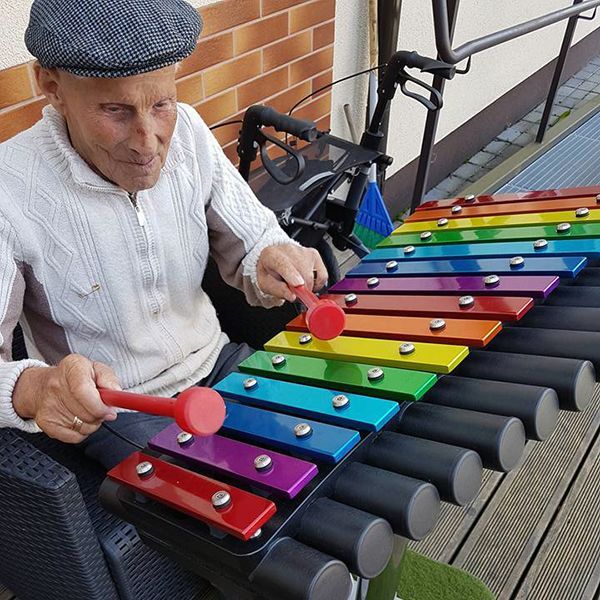
- Inclusive - suitable for all ages and abilities
- Free to use - removing financial constraints
- Engaging - encouraging creativity through play
This approach transforms music from a structured activity into an everyday experience.
Creating Inclusive Play Environments
Music in inclusive playgrounds provides a rich sensory experience that encourages exploration and interaction. Outdoor musical environments are designed to be intuitive and inviting, allowing children to participate in their own way and at their own pace. These spaces support:
- Intergenerational play
- Social interaction and collaboration
- Sensory exploration and discovery
They also help ensure that children with additional needs or learning differences can access music in a supportive and non-restrictive environment.
Supporting Community and Cultural Engagement
Placing musical instruments in public spaces not only benefits individuals but also strengthens communities. Shared musical experiences encourage people to:
- Connect with others
- Spend more time outdoors
- Engage with cultural and creative activities
As libraries, schools, and public spaces evolve into community hubs, outdoor music increasingly plays an important role in activating these spaces.
Recognized Across the Education Sector
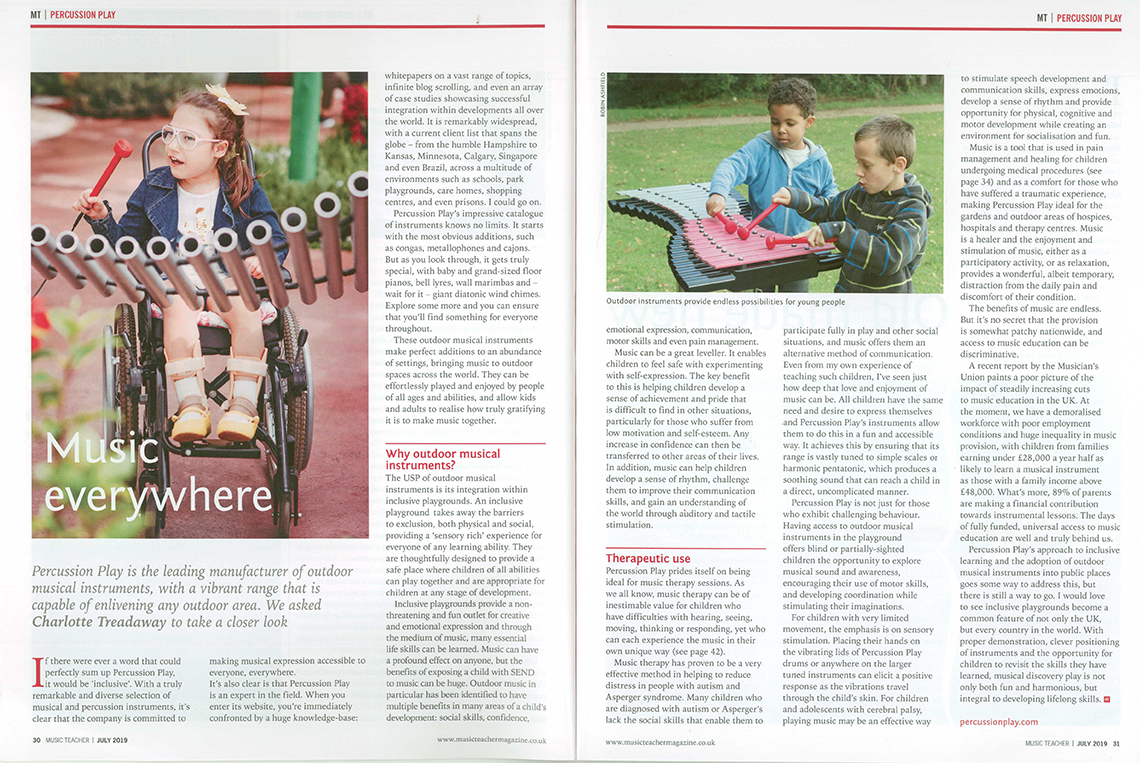
The importance of accessible music and inclusive play has been recognized across the education sector. Coverage in Music Teacher Magazine highlighted the role of outdoor musical instruments in supporting inclusive playground design and expanding access to music. This growing recognition reflects a wider shift towards creative, inclusive and experiential learning environments.
Expanding Opportunity Through Play
Expanding access to music doesn’t always require formal lessons or structured programs. Sometimes, it begins with simply providing the tools and space for children to explore sound and rhythm naturally. By integrating outdoor musical instruments into everyday environments, we can:
- Remove barriers to participation
- Encourage creativity and confidence
- Support lifelong engagement with music
Conclusion
Music should be accessible to everyone, regardless of background, ability or circumstance. Outdoor musical play offers a simple yet powerful way to make this possible. By rethinking how and where children experience music, we can create more inclusive environments that support learning, wellbeing, and community connection - ensuring that every child has the opportunity to discover the joy of music.