By clicking "Subscribe", you confirm that you have read and accepted our Terms and Conditions, Privacy Policy and Cookie Policy.
Originally starting as Empty Classroom Day, Outdoor Classroom Day is now a global campaign to celebrate and inspire outdoor learning and play. On this day, thousands of schools around the world take lessons outdoors and prioritize playtime, encouraging their students to enjoy just being outside, being with other children, and getting out in all kinds of weather.
The movement for outdoor learning is the brainchild of environmental educator Anna Portch, who started the project in 2012. The original aim was for every school in London to take one extra lesson outside on the same day of the year. At first, it attracted the attention of just a handful of schools in London. By 2017, over 2.3 million children worldwide participated in more than 100 countries, with more than 580,000 in the UK and Ireland and 200,000 in Australia. Today, over 9.6 million children and more than 105,000 teachers, parents, and supporters are involved worldwide.
Teachers and schools are encouraged to be creative in using the day not only to enhance pupils’ learning experience but also to foster a connection to nature, in an era when young people are spending more and more time indoors. A survey carried out by the day’s organizers found that 65% of primary schools globally give pupils less than one hour of playtime a day, despite the majority of teachers agreeing that outdoor playtime during the school day is critical for children to reach their full potential.
Outdoor learning environments have become increasingly valued as educators recognize their positive impact on children’s education and wellbeing. Teaching beyond the classroom offers meaningful opportunities for engagement, creativity and improved outcomes. Research from Natural England’s Natural Connections Demonstration Project highlights the benefits of outdoor learning:
Immune Health - The truth is that people across the developed world, both young and old, are living the vast majority of their lives indoors. Back in 2014, a WHO report found that Europeans spend around 90% of their time indoors, even though staying indoors can negatively affect immune health. The immune system works best when challenged regularly. That doesn’t happen when we spend time indoors.
Stress Relief - Getting outside can help you escape the stress of work or school. High levels of stress at work and school are associated with depression, obesity, and high blood pressure. Stress is unhealthy when not managed properly. Luckily, there is a natural stress reliever right outside your door. Spending time outdoors relieves stress, and blood levels of the stress hormone cortisol drop after time outdoors.
Staying Sharp - For a significant boost in focus and creativity, escape outdoors for a period of time. Creative problem-solving and cognitive function are boosted after spending time outdoors.
Calm the Mind - Being outside can reduce blood pressure, lower heart rate, and decrease cortisol levels. When we are outside, our bodies slow down, helping us feel peaceful and calm. Our minds work in a similar way. Spending time outside improves our mood and reduces anxiety. We can focus better outdoors, and our improved concentration can help us address feelings of stress and anxiety.
Time spent outside also increases social engagement and can improve mental health. Self-esteem can also receive a boost after time spent playing outdoors. Whatever the exact cause, getting outdoors will help you live a happier, longer life. Find time in your day to venture outside and take advantage of the health benefits of the outdoors - your body and mind will thank you for it.
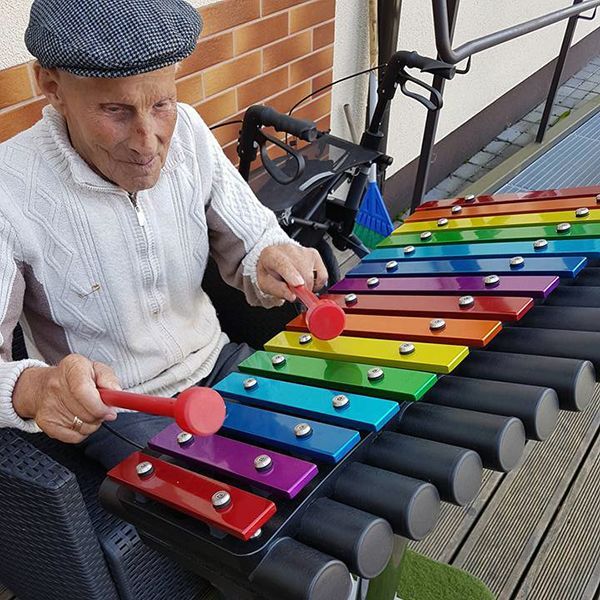
Outdoor Classroom Day is not just about one day; we need to sustain outdoor play and learning year-round. Outdoor musical instruments in the school playground or local inclusive play park are an invitation for children to experience the outdoors in a new and fascinating way. Music motivates, enriches, touches, relaxes, and energizes, so playing musical instruments in an outdoor setting can lead to significant physical health benefits.
By combining music and the ‘great outdoors’, Percussion Play believes its instruments can create fun and laughter and facilitate learning. Outdoor musical instruments can support a child’s musical education and encourage both individual and group participation, particularly instruments such as the Duo xylophone, which can help encourage children with learning difficulties to play music together.
By clicking "Subscribe", you confirm that you have read and accepted our Terms and Conditions, Privacy Policy and Cookie Policy.