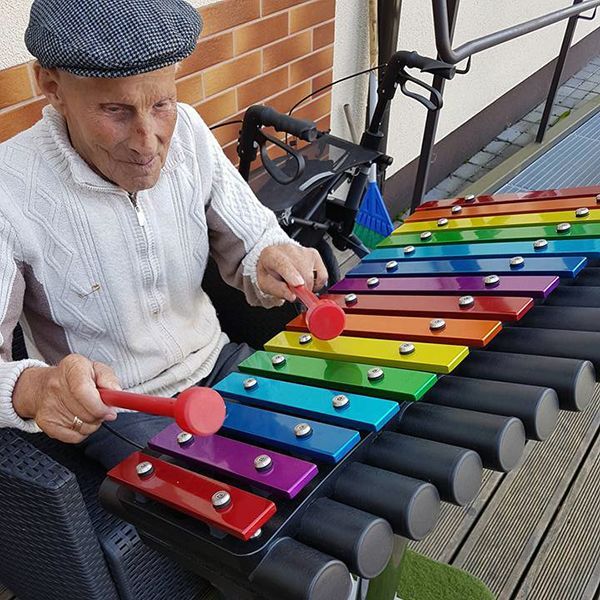
Outdoor Music Meets STEAM at Brighton District Library
We have all seen how libraries can diversify, with many now offering more than just books. Today, libraries are also looking to include STEAM—Science, Technology, Engineering, Art, and Mathematics. Whether it's providing opportunities for art classes or supporting young learners with their math development, libraries are seeking innovative ways to introduce their users to STEAM.
Brighton District Library in Michigan serves a population of around 50,000 and has added STEAM to its offerings by installing several outdoor musical instruments from Percussion Play.
When renovating their outside space, the library decided to include instruments that can illustrate the science behind sound. Percussion Play’s Cyclone was chosen as it illustrates cause and effect. Spinning the wheel will set the ball bearings inside the wheel into motion to mimic the sound of falling rain. From a gentle pitter-patter through a heavy rain shower to a full-on monsoon, players can control the intensity of the rain sound by how hard they spin the wheel, demonstrating the concept of cause and effect and encouraging gross motor skills.
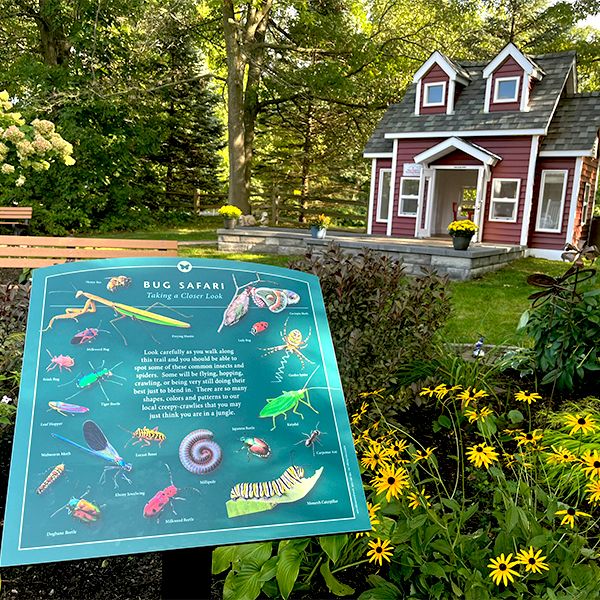
Next to the Cyclone, the library includes a sign explaining how the sounds are made. This is where caregivers can discuss the science of sound, promoting STEAM.
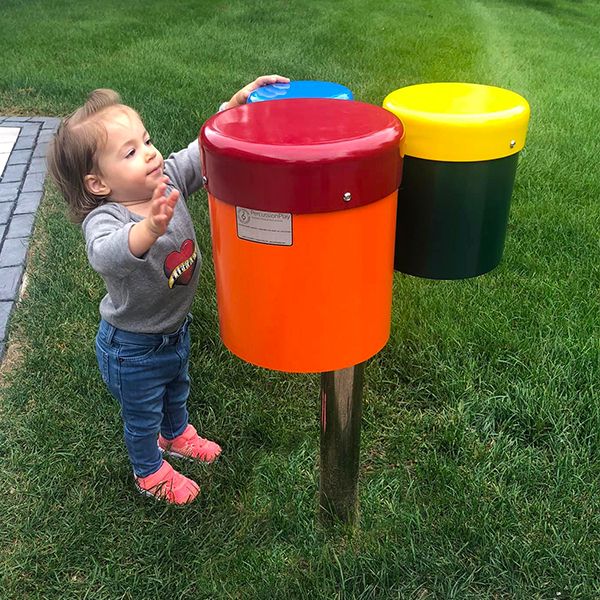
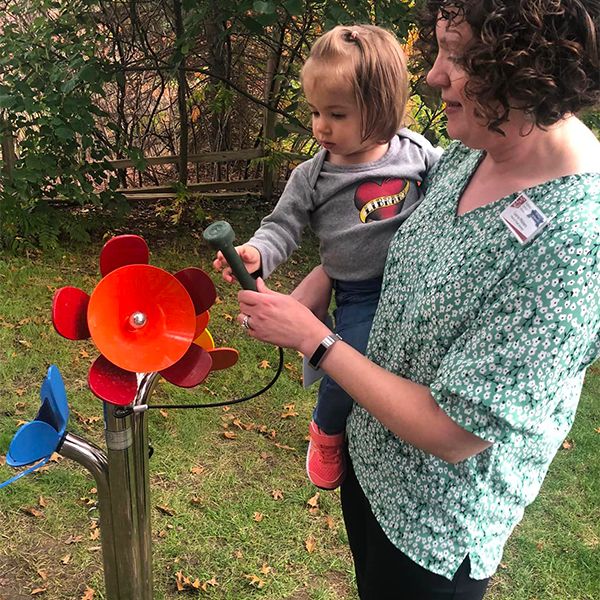
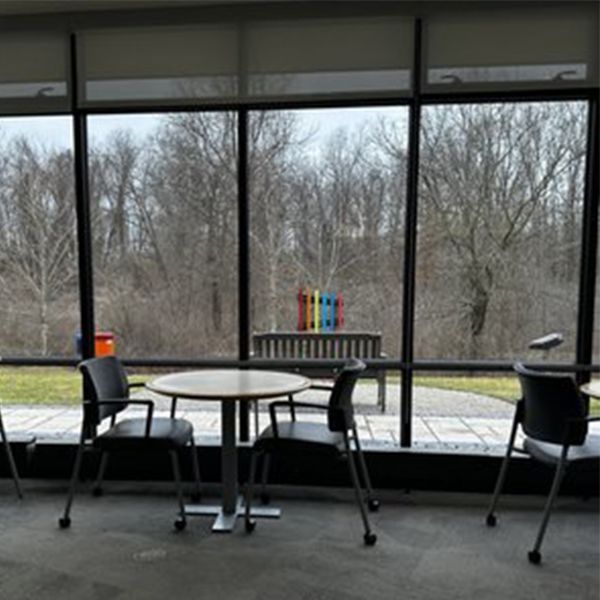
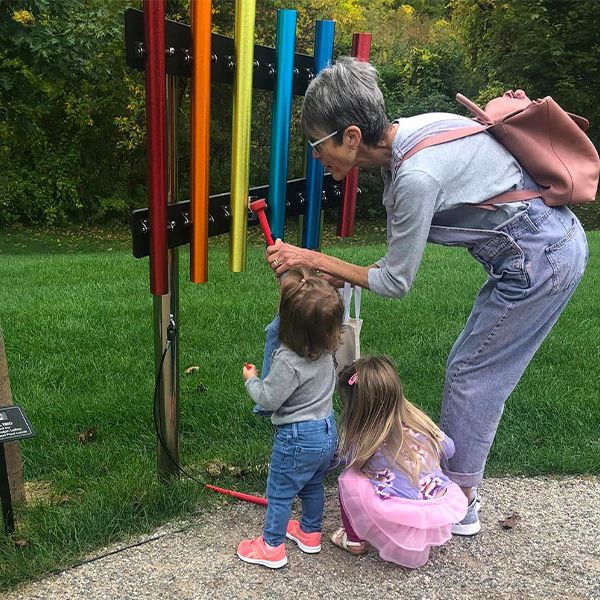
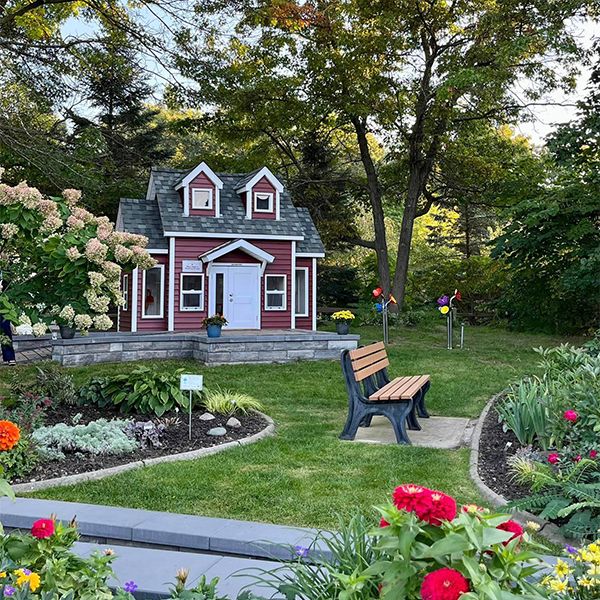
The instruments are dotted around the garden area, in different ‘nooks,’ and, along with the Cyclone, include the Rainbow Trio Ensemble and Harmony Flowers.
If patrons are lucky, those not outside can enjoy the sounds of the instruments. As Laurie explains, “It sounds a bit like wind chimes—it’s a very pleasant experience—it’s not like the people in study rooms are being disturbed!”
Bringing STEAM Learning to Life Through Outdoor Music
Outdoor music can play a powerful role in a STEAM (Science, Technology, Engineering, Arts, and Mathematics) garden by transforming abstract concepts into engaging, hands-on experiences. Musical instruments installed outdoors invite exploration of sound waves (science), rhythm patterns (maths), and cause-and-effect relationships (engineering), while also encouraging creative expression through composition and improvisation (arts). Children can experiment with pitch, resonance, and materials - for example, comparing how metal, wood, or chimes produce different tones - supporting inquiry-based learning in a playful setting. Technology can be introduced through sound recording or interactive elements, while collaborative music-making fosters communication and problem-solving skills. By blending sensory play with structured discovery, outdoor musical installations help bring STEAM learning to life, making the garden a dynamic, inclusive environment where curiosity and creativity grow together.