Back To School? Make Some Time for Free Play
As schools reopen for the new term, daily routines quickly shift from relaxed summer days to busy schedules filled with early starts, homework, and extracurricular activities. While structure is important, it’s essential that children still have time for free, unstructured play.
Free play is fun - but it’s far from frivolous.
Why Free Play Matters for Child Development
Children need time to run, explore, build, imagine, and interact with others. These experiences support healthy physical, emotional, and cognitive development at every age - not just in early childhood. Even as children grow, play continues to play a vital role in learning. Over-scheduling can limit opportunities for creativity and independence, making it crucial to protect time for open-ended, self-directed play.
Through play, children learn to:
- Make decisions and solve problems
- Develop self-control and confidence
- Navigate rules and social situations
- Express emotions such as joy, frustration, and curiosity
- Build friendships and learn cooperation
Most importantly, play is a powerful source of happiness and wellbeing.
The Importance of Outdoor Play
Spending time outdoors allows children to process what they’ve learned in school while engaging in new forms of exploration and discovery. Outdoor play environments encourage movement, imagination, and social interaction.
However, outdoor spaces should go beyond traditional physical play (running, climbing, jumping). To fully support development, they should offer rich, multi-sensory experiences.
Adding Music to Outdoor Play Spaces
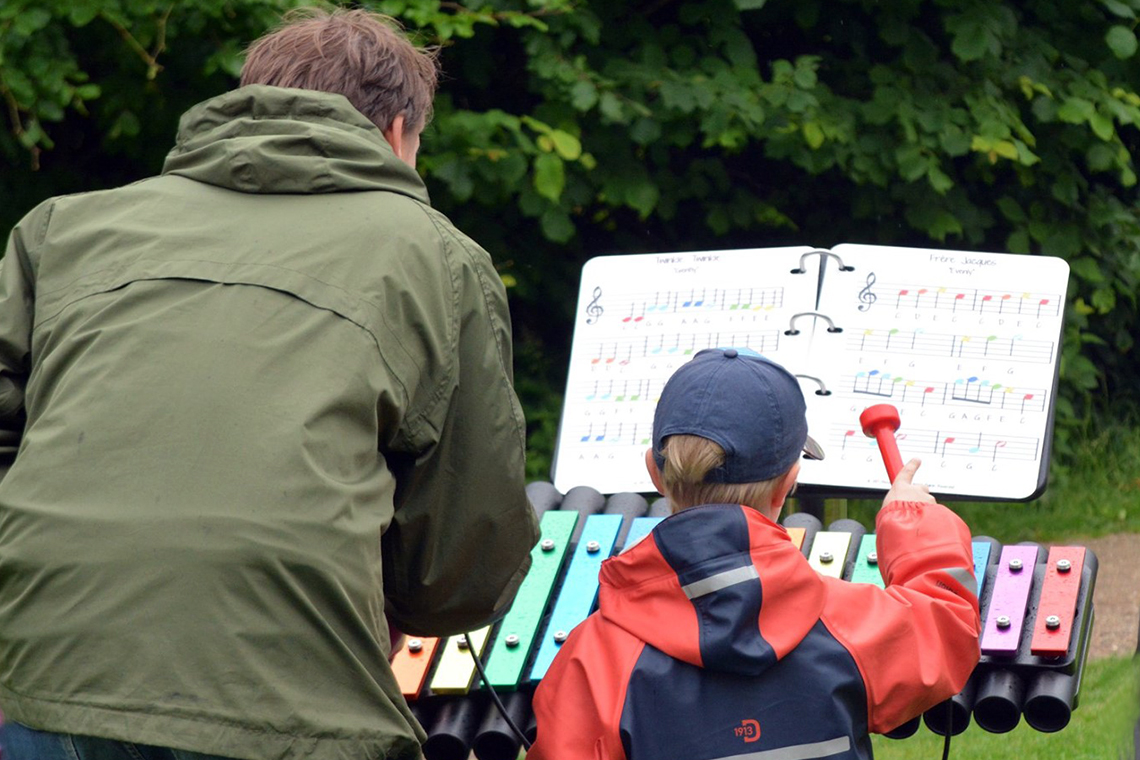
Integrating music into outdoor play environments creates new opportunities for creativity and expression. Hands-on musical play encourages children to experiment with sound while developing confidence and communication skills. Outdoor musical play can:
- Support self-expression and creativity
- Build self-esteem and confidence
- Encourage collaboration and teamwork
- Enhance sensory and cognitive development
By incorporating musical elements into playgrounds, schools, parks, and community spaces, children can engage in inclusive, accessible play experiences that appeal to a wide range of abilities.
Creating Inclusive Musical Play Environments
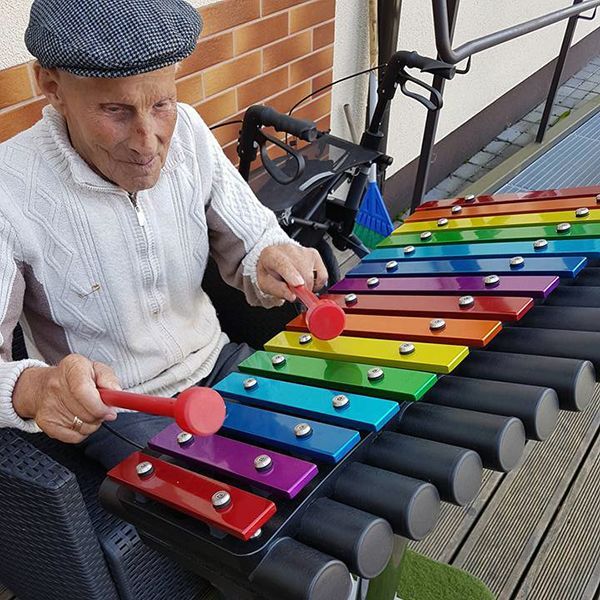
Outdoor musical instruments are ideal for inclusive design. They are intuitive, require no prior experience, and can be enjoyed by people of all ages and abilities. Placed in settings such as:
- School playgrounds
- Community parks
- Walking trails
- Family attractions
- Care environments
…they provide opportunities for intergenerational play and shared creative experiences.
With no rules or required skill level, musical play focuses on freedom, exploration, and connection. Simple interactions can produce rich and rewarding soundscapes, allowing every participant to feel successful.
Play Is for Everyone
While free play is essential for children, its benefits extend far beyond childhood. Play helps people of all ages to:
- Reduce stress
- Strengthen social connections
- Boost learning and creativity
- Improve overall wellbeing
Making time for play - especially in outdoor, inclusive environments - helps build stronger, healthier, and more connected communities.