Mindfulness, Music and the Great Outdoors
In a fast‑paced, screen‑heavy world, many of us move through our days on autopilot – disconnected from what we’re doing, how we’re feeling, and what’s happening around us. Practices that help us slow down, reconnect, and become more present are increasingly valued for their role in supporting mental wellbeing.
One such practice is mindfulness, and when combined with music, movement, and outdoor environments, it becomes a powerful and accessible way to support everyday wellbeing.
What Is Mindfulness?
Mindfulness is the practice of paying attention to the present moment - to your thoughts, feelings, bodily sensations and surroundings - without judgement.
It’s noticing when your mind drifts to the past or future and gently bringing your attention back to what is happening right now. Moments of “unmindfulness” are common – arriving somewhere without remembering the journey, eating without tasting, or missing parts of a conversation because the mind is elsewhere.
Mindfulness helps interrupt this automatic pilot mode, allowing us to engage more fully with our experiences.
Why Mindfulness Matters
Mindfulness is increasingly recognized across education, healthcare, community, and workplace settings for its role in supporting wellbeing. While experiences differ, mindfulness practice is commonly associated with:
- Greater emotional awareness
- Improved focus and attention
- Reduced feelings of stress and overwhelm
- Enhanced creativity and problem‑solving
- Stronger relationships and empathy
- Better mood regulation and sleep patterns
Importantly, mindfulness doesn’t require specialist equipment or prolonged stillness. Many everyday activities - especially creative and physical ones - naturally lend themselves to mindful awareness.
Mindfulness Outdoors: Adding Nature and Movement
Taking mindfulness outdoors adds another valuable layer. Time spent in parks and natural spaces allows us to engage our senses, breathe fresh air, and move in ways that feel purposeful rather than forced. Even gentle movement such as standing, reaching, swaying or walking supports both physical and mental wellbeing. Parks designed for wellbeing can play a key role in encouraging this kind of everyday movement alongside opportunities for creativity and calm.
Further Reading: Creating a Wellness Grove in Your Park: Outdoor Musical Instruments for Community Wellbeing
Music as a Tool for Mindfulness
Music engages our senses, encourages focus, and invites gentle physical movement, making it a natural and accessible pathway into mindful awareness.
Music Makes Mindfulness Feel Natural
Making music is, by its nature, a mindful activity. Players focus on rhythm, sound, movement, and sensation, drawing attention away from distractions and toward the present moment. Music also offers a non‑verbal outlet for emotions and self‑expression, helping people stay grounded and engaged rather than preoccupied with stress or worries.
Movement and Music Go Hand in Hand
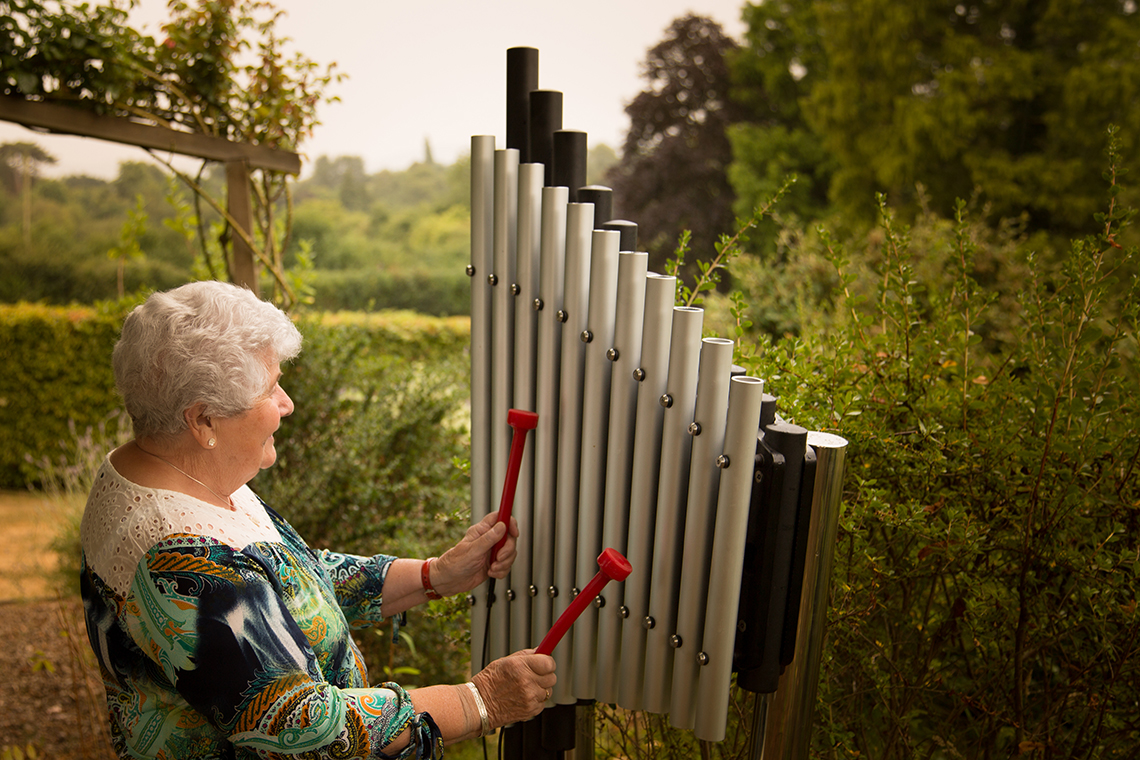
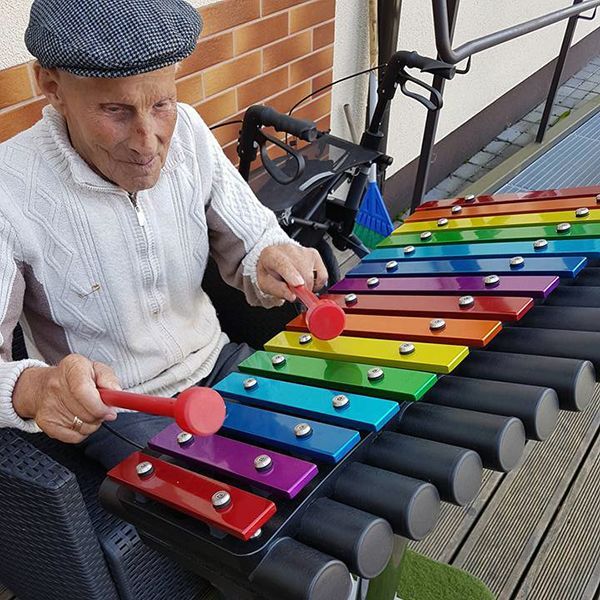
Playing musical instruments outdoors naturally encourages purposeful movement. Whether striking a xylophone, marimba or musical chimes, players use their arms, shoulders and back, while drumming can gently raise the heart rate and introduce light cardio activity.
This combination of movement and creative focus helps release physical tension while simultaneously stimulating mental, emotional and cognitive processes – a powerful pairing for reducing stress and supporting wellbeing.
How Mindfulness Enhances Musical Play
Mindfulness can transform how people experience music, regardless of age or ability. A mindful approach encourages:
- Focus without self-judgment
- Experimentation without fear of mistakes
- Confidence and creativity
- Awareness of how music feels as well as how it sounds
Shared musical experiences can also enhance connection between people of different ages and abilities, supporting wellbeing across the lifespan through intergenerational musical play.
Further Reading: Why Intergenerational Play Builds Stronger Communities – Health Benefits Across the Lifespan
Practicing Mindful Music‑Making Outdoors
Outdoor musical instruments are particularly well-suited to mindful play. Designed for intuitive, inclusive use, they invite people to explore sound, movement and rhythm without prior musical experience. Here are four simple techniques for practicing mindful music‑making:
1. Take One Mindful Breath
Before you begin, notice your posture. Ground your feet, relax your shoulders and take a slow breath to allow your mind and body to settle.
2. Practise Mindful Listening
As you play a note, notice how it sustains and fades. When silence returns, pay attention to the surrounding sounds in the environment.
3. Practise Mindful Movement
Notice physical sensations – the weight of beaters, the vibration of chimes, the impact of a drum strike. Observe how rhythm naturally encourages movement.
4. Keep It Simple
When your attention wanders, gently bring it back to the present moment – to your breath, the sound you’re creating, or how your body feels as you play.
Music, Movement and Mindfulness - Working Together
Music, movement, and mindfulness complement one another beautifully. Experienced outdoors, they create opportunities for creativity, connection, and calm that support mental wellbeing in an accessible, enjoyable way. Whether played alone or together, outdoor musical instruments invite you to slow down, move more, express yourself, and enjoy the moment.