By clicking "Subscribe", you confirm that you have read and accepted our Terms and Conditions, Privacy Policy and Cookie Policy.
Music plays a vital role in children’s development, supporting creativity, confidence and communication. When combined with the freedom of the outdoors, music becomes even more powerful - creating engaging, inclusive, and memorable learning experiences. Outdoor music learning allows children to explore sound, movement and expression in a natural, open environment, free from the constraints of the classroom.
Children often feel more relaxed and less inhibited outdoors. This sense of freedom encourages experimentation, curiosity and self-expression - essential elements of both learning and creativity. Outdoor environments provide:
In this setting, learning becomes more experiential, playful and engaging, helping children connect with music in a meaningful way.
Outdoor musical play supports a wide range of developmental outcomes. By interacting with instruments in an open environment, children can:
Importantly, outdoor music shifts the focus away from performance and towards participation and enjoyment.
Outdoor musical environments provide a natural way to introduce and reinforce key musical concepts. Through hands-on exploration, children begin to understand:
These foundational skills help children develop musical awareness while building confidence in their ability to create.
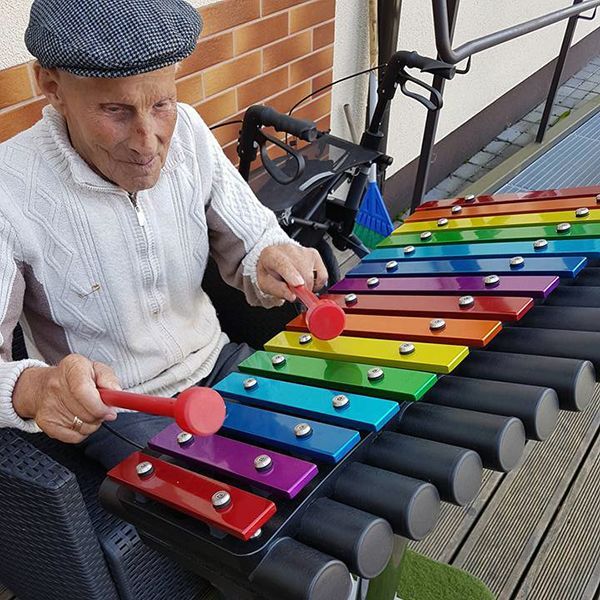
Outdoor musical instruments make it easy to integrate music into everyday play. Designed for intuitive use, they allow children of all abilities to participate without needing formal instruction. Many instruments, such as marimbas and xylophones, are tuned to the pentatonic scale, ensuring that notes always sound harmonious - no matter how they are played. This removes the fear of “getting it wrong” and encourages children to experiment freely. Explore examples:
These instruments are ideal for:
Music is inherently social. Outdoor musical play encourages children to:
Through collaborative play, children develop communication skills, empathy, and cooperation. Creating music as a group fosters a sense of belonging and shared achievement.
Integrating music into outdoor spaces supports both education and wellbeing. It encourages children to spend more time outside, benefiting from fresh air, movement and a connection to nature. In an age dominated by screens and structured schedules, outdoor musical play provides a valuable opportunity for children to:
Outdoor musical instruments offer schools and early years settings a simple, effective way to enhance their play spaces. Whether used during structured lessons or free play, they:
By incorporating music into playgrounds and learning environments, schools can create inclusive, stimulating spaces where children thrive.
By clicking "Subscribe", you confirm that you have read and accepted our Terms and Conditions, Privacy Policy and Cookie Policy.