Connecting Generations Through Music and Play:
Intergenerational play is rapidly emerging as a powerful way to boost cognitive, social, and emotional well-being across all ages. This white paper explores how music-making can enhance these programs, fostering meaningful connections among children, older adults, and the wider community.
Join internationally renowned designer and universal design pioneer Dr. Patricia Moore as she shares the remarkable experiences that shaped her approach to inclusive design. In this thought-provoking conversation, Patti explores the importance of empathy, accessibility, and the design of public spaces that welcome people of all ages and abilities.
Discover how thoughtful, human-centred design can foster connection, wellbeing, and belonging, while creating parks, playgrounds, and community spaces that truly work for everyone.
How can outdoor musical instruments support placemaking and community engagement?
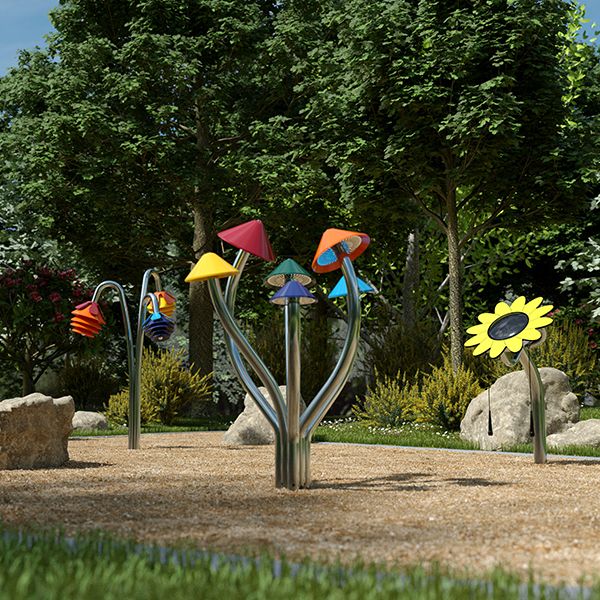
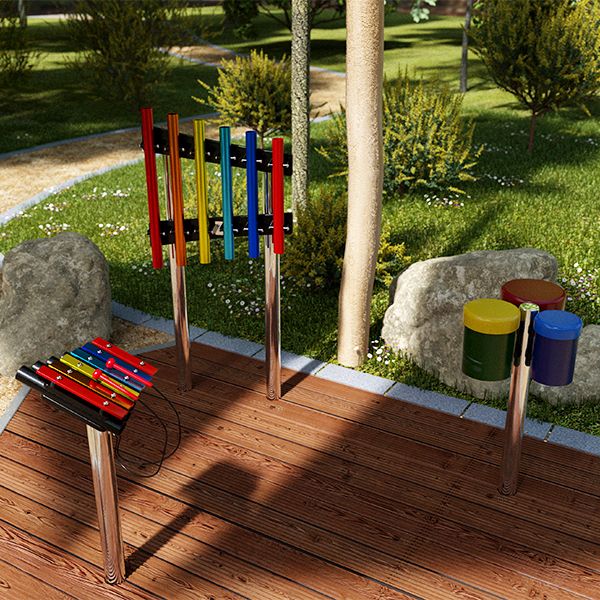
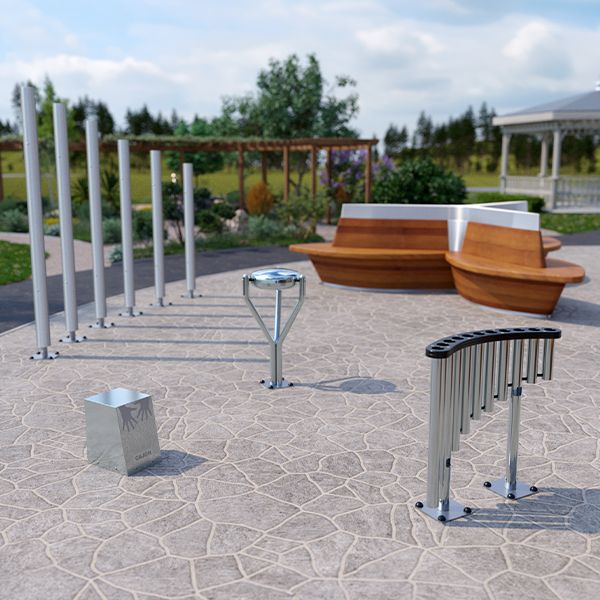
Outdoor musical instruments support placemaking by creating destinations within a landscape that encourage people to stop, interact, and spend time together. They can be used to activate underused spaces, create focal points in parks and plazas, enhance courtyards, and establish points of interest along trails and pathways. In trail environments, instruments can even act as waymarkers and destinations, encouraging exploration and helping draw visitors through a site.
Unlike many recreational features, outdoor musical instruments are accessible to people of all ages and abilities, require no prior musical knowledge, and encourage spontaneous interaction between family members, friends, and strangers alike. Their inclusive nature helps foster social connection and community engagement, while durable, low-maintenance designs make them easy to incorporate into both new and existing landscape projects.
By combining play, art, and music, outdoor musical instruments help transform public spaces into more welcoming, engaging, and memorable environments that people want to visit, share, and return to.
Where can outdoor musical instruments be incorporated within a landscape design?
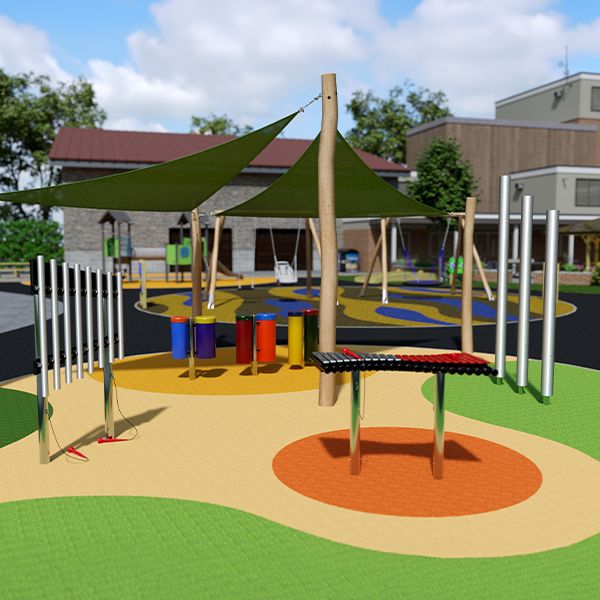
Outdoor musical instruments are highly versatile and can be incorporated into a wide range of landscape architecture projects, including parks, trails, plazas, courtyards, playgrounds, waterfronts, botanical gardens, community spaces, senior living communities, healthcare environments, and visitor attractions.
They can be used to create focal points, activate underused spaces, enhance gathering areas, encourage exploration along trails and pathways, or establish memorable destinations within a landscape. Instruments can be grouped to form dedicated musical spaces or distributed throughout a site to create moments of discovery and interaction.
Because they are accessible to people of all ages and abilities and require no musical experience, outdoor musical instruments can complement broader placemaking, inclusion, and wellbeing objectives while helping create engaging environments that people want to visit, explore, and enjoy.
Can outdoor musical instruments help create inclusive and intergenerational spaces?
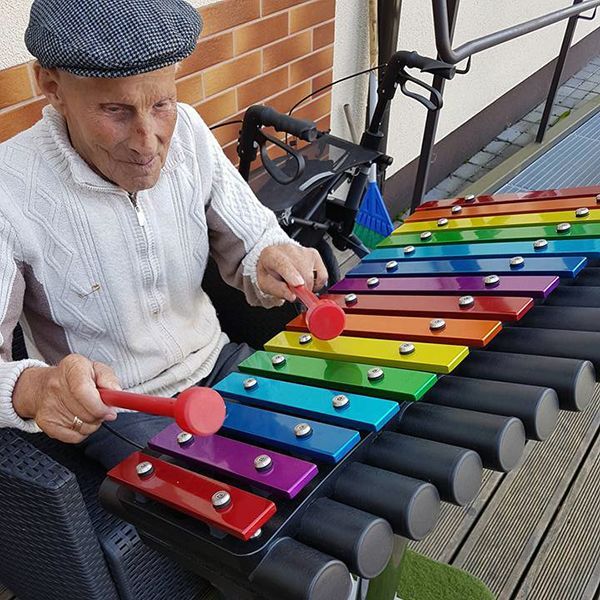
Outdoor musical instruments are uniquely suited to creating inclusive and intergenerational spaces because they can be enjoyed by people of different ages, abilities, and backgrounds at the same time. Unlike activities that are designed for a specific age group, musical play encourages participation across generations, creating opportunities for children, teenagers, adults, and older people to interact through a shared experience.
No musical knowledge or previous experience is required, making outdoor music accessible to a wide range of users. Many instruments are designed to be wheelchair accessible and can be enjoyed independently or collaboratively, allowing people to participate in a way that suits their abilities and preferences.
Few outdoor activities can be enjoyed equally by a young child, teenager, parent, and grandparent. Whether installed in a community park, playground, senior living community, healthcare setting, courtyard, or along a trail, outdoor musical instruments help create welcoming environments where people can connect, communicate, and play together.
By encouraging participation rather than observation, outdoor musical instruments support inclusive design objectives and help landscape architects create spaces where everyone feels welcome, valued, and able to contribute to the shared experience.
How can outdoor musical instruments help activate parks, trails, and public spaces?
Outdoor musical instruments help activate spaces by creating reasons for people to stop, explore, and interact with their surroundings. They can serve as destinations along trails, focal points within plazas and courtyards, or gathering spaces within parks and public realms. By encouraging participation and discovery, they help draw people through a site, increase dwell time, and create memorable experiences that encourage repeat visits.
Unlike passive landscape features, outdoor musical instruments invite active engagement, transforming underused areas into vibrant spaces where people can meet, play, and connect.