Ten Reasons Playing a Musical Instrument Supports Stress Relief and Wellbeing
The Wellbeing Benefits of Playing Musical Instruments Outdoors
Stress is a common part of modern life, but finding healthy, accessible ways to manage it can make a meaningful difference to our wellbeing. One proven and enjoyable approach is playing musical instruments - especially in outdoor spaces. Music, movement, and nature each support mental and emotional health. When combined, they create a powerful and inclusive way to slow down, reconnect, and feel better. From mindfulness and creativity to social connection and physical activity, outdoor musical play offers benefits for people of all ages and abilities.
Here are 10 reasons why playing musical instruments - particularly outdoor musical instruments - can help reduce stress and support wellbeing.
1. Encourages Mindfulness
Playing music naturally brings your attention into the present moment. Whether you are improvising, keeping a rhythm, or exploring sounds, your focus shifts from worries to the act of creating.
Mindfulness - the practice of being fully engaged in the present without judgment - is widely recognized for its positive effects on mental health. Musical play offers an accessible, enjoyable way to experience mindfulness without the pressure of traditional meditation.
Related reading: Mindfulness, Music and the Great Outdoors
2. Supports Digital Detox and Mental Rest
Stepping outside to play an instrument encourages time away from screens. With work, education, and socializing increasingly happening online, many people experience constant digital stimulation. Outdoor musical instruments offer a hands‑on, real‑world activity that allows the mind to slow down, helping to reduce mental overload and encourage relaxation.
3. Strengthens Social Connection
Music is a shared language. Playing instruments together encourages cooperation, listening, and non‑verbal communication, all of which contribute to stronger social bonds. Social connection is a key protective factor for mental wellbeing. Outdoor musical spaces make group play spontaneous and inclusive, supporting intergenerational interaction, community engagement, and reduced feelings of isolation. Music is a fantastic way to connect with others, whether with friends, family, or across generations, supporting emotional wellbeing throughout life.
Further Reading: Why Intergenerational Play Builds Stronger Communities – Health Benefits Across the Lifespan
4. Provides a Healthy Emotional Outlet
Music can help people express emotions that are difficult to put into words. Playing an instrument can be calming, grounding, and emotionally releasing, making it a valuable tool for managing stress and anxiety. For many people, musical play becomes a form of self‑soothing – a positive distraction during challenging moments and a way to reset after a stressful day.
5. Builds a Sense of Achievement
Learning new patterns, sounds, or rhythms creates regular moments of success. These small achievements can improve motivation and reinforce a sense of capability. Mastering a tune or contributing to a group soundscape can increase confidence and provide positive reinforcement that often carries over into other areas of life.
6. Develops Confidence for All Abilities
Outdoor musical instruments are specifically designed for inclusive play. Instruments tuned to pentatonic scales allow users to improvise freely without producing “wrong” notes. This removes fear of failure and encourages experimentation, helping both children and adults build confidence, creativity, and willingness to perform or collaborate.
7. Encourages Patience and Focus
Playing a musical instrument is a reminder that meaningful progress takes time. In a world of instant results, music invites people to slow down, practice, and remain patient. Developing rhythmic timing and coordination supports sustained attention and self‑regulation, both of which are linked to reduced stress levels.
8. Promotes Movement and Physical Engagement
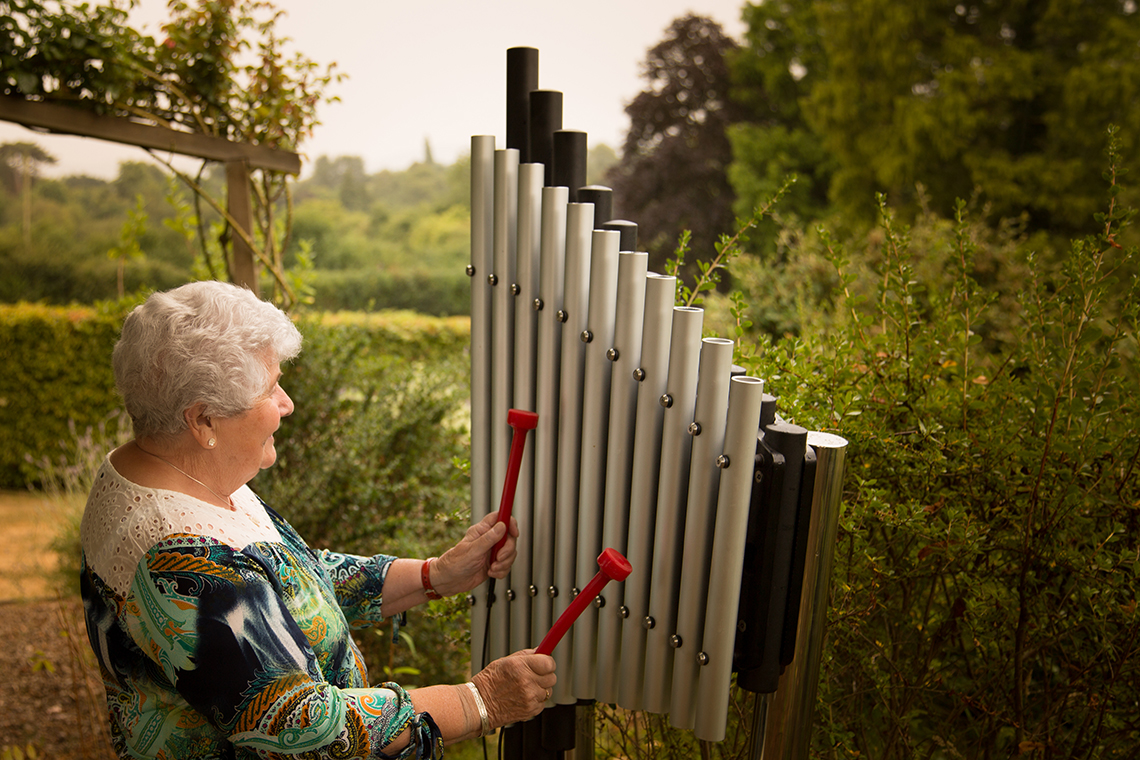
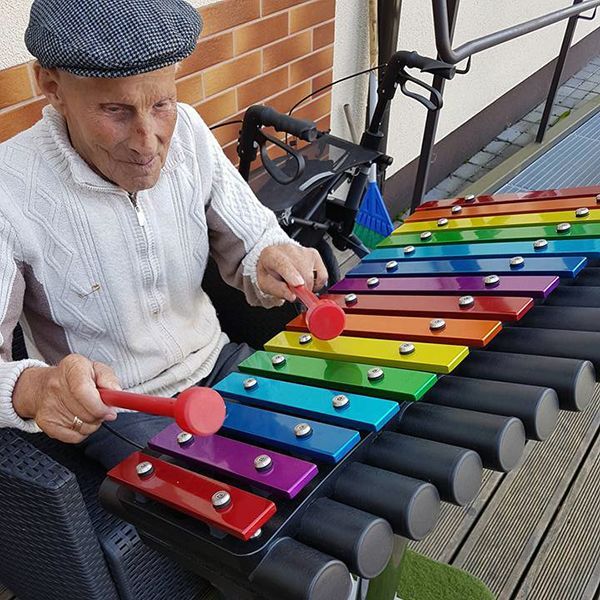
Playing musical instruments outdoors naturally encourages movement. Whether striking a xylophone, marimba, or musical chimes, players use their arms, shoulders, and back, while drumming can raise heart rate and introduce light cardio. This kind of purposeful movement supports both physical and mental wellbeing, especially when combined with rhythm and creativity. Music engages the brain on multiple levels - activating mental, emotional, and cognitive processes - while movement helps release tension, improve focus, and regulate mood.
9. Stimulates Creativity and “Flow”
Creative expression plays an important role in wellbeing. Playing music stimulates cognitive, emotional, and imaginative processes, encouraging the brain to think differently and explore new ideas. Many players experience a state of “flow” - a deeply immersive, almost meditative experience where time fades away, and stress is temporarily suspended.
10. It’s Simply Enjoyable
Above all, playing music is fun. Enjoyment is a powerful driver of wellbeing, making musical play both effective and sustainable. Unlike passive activities, music actively engages the brain and body, creating positive emotional experiences that support long‑term mental resilience.
Supporting Wellbeing Through Outdoor Musical Play
Outdoor musical instruments provide safe, inclusive, and accessible opportunities for creative expression, social connection, and mindfulness in parks, schools, care settings, and community spaces. By combining music, movement and nature, they offer a simple yet powerful way to support wellbeing across the lifespan - without prior musical experience required.