By clicking "Subscribe", you confirm that you have read and accepted our Terms and Conditions, Privacy Policy and Cookie Policy.
Children develop across four key areas - physical, intellectual, emotional, and social - all of which are closely interconnected. While growth continues throughout life, early childhood represents the most rapid and formative stage. Supporting development across all these areas requires rich, engaging experiences. One powerful and often underutilized approach is outdoor musical play. There is growing evidence that musical experiences help build essential cognitive, emotional, and social connections. These experiences support children as they reach developmental milestones, while also enhancing wellbeing, confidence, and resilience.
Outdoor musical instruments combine movement, creativity and sensory play, making them ideal tools for holistic development. They encourage children to explore, experiment and express themselves freely.
Playing outdoor musical instruments naturally promotes gross and fine motor skills. Standing instruments such as the Akadinda or Grand Marimba require children to:
These actions develop bilateral coordination, essential for controlled, fluid movement and everyday physical tasks. Handling mallets also builds muscle strength and fine motor control, supporting skills that transfer into classroom activities such as writing and drawing.
Related | Using Musical Instruments to Improve Core Stability
Outdoor music provides a powerful outlet for emotional expression. Children can explore sound freely without pressure, helping them process feelings in a safe and creative way. Benefits include:
With 1 in 6 children experiencing mental health challenges, accessible and engaging tools like music are increasingly important in supporting wellbeing.
Music is inherently social. Playing together encourages children to:
Group music-making strengthens social bonds and creates a sense of belonging. Research shows that making music together helps children better recognize and respond to others’ emotions. Outdoor musical environments are particularly effective because they:
Outdoor musical play stimulates curiosity, imagination and problem-solving. Children learn to:
With no rules or “right” way to play, musical environments promote creative thinking and independent exploration.
Outdoor spaces should go beyond traditional physical play. By integrating music, they become multi-sensory learning environments that support children in diverse ways. Outdoor musical instruments can be installed in:
Because they are durable and weather-resistant, they provide year-round opportunities for play, supporting continuous learning and development.
Outdoor musical instruments are designed to be:
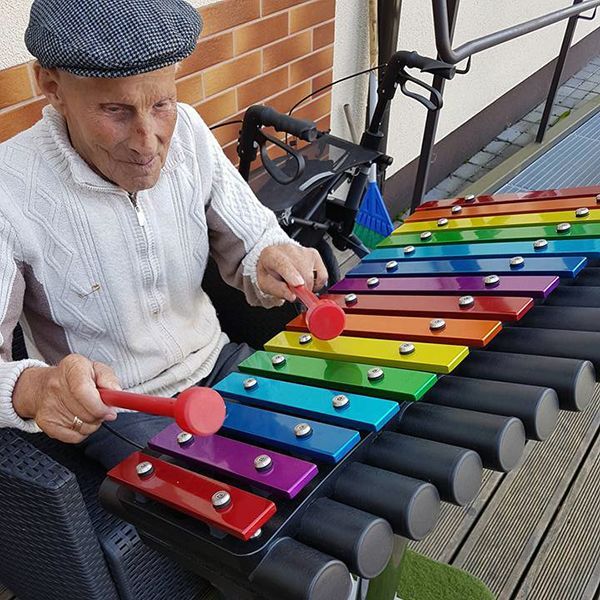
They enable inclusive play, allowing children of different skill levels and needs to participate equally. This inclusivity fosters confidence, independence and meaningful interaction. Musical play also supports intergenerational engagement, bringing together children, families, and communities through shared experiences.
While play is essential in childhood, its benefits extend into adulthood. Engaging in playful, creative activities helps to:
Creating spaces that encourage outdoor musical play helps build healthier, more connected communities.
Outdoor musical play is a simple yet powerful way to support children’s mental, emotional and physical development. By combining music, movement and creativity, it offers inclusive, engaging experiences that benefit children of all abilities. Investing in outdoor musical environments not only enhances play spaces - it nurtures confident, expressive and socially connected individuals.
Read More | Listening To and Making Music Helps Understand Feelings and Emotions
By clicking "Subscribe", you confirm that you have read and accepted our Terms and Conditions, Privacy Policy and Cookie Policy.