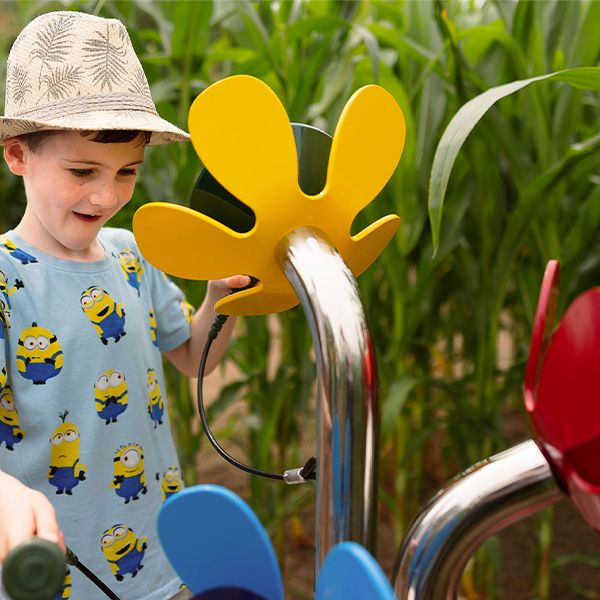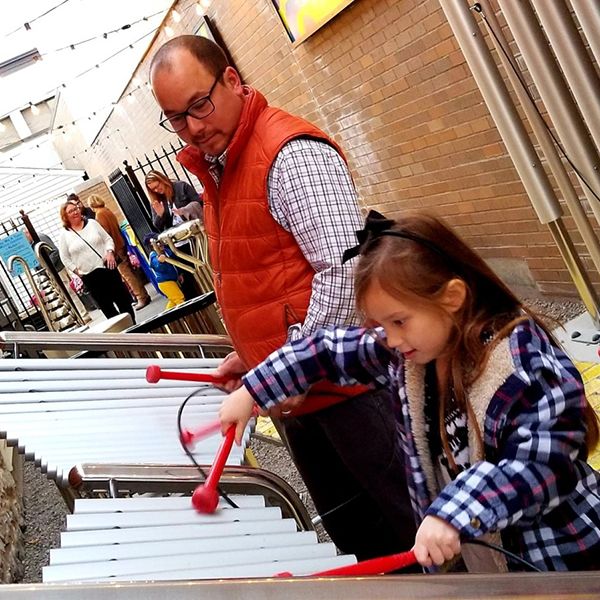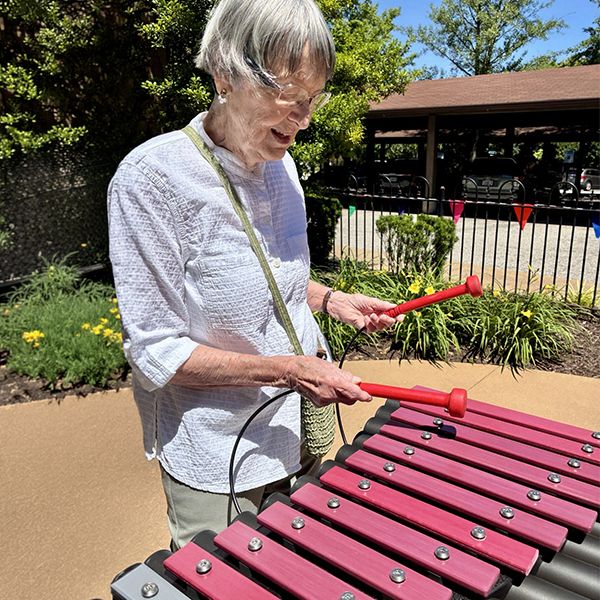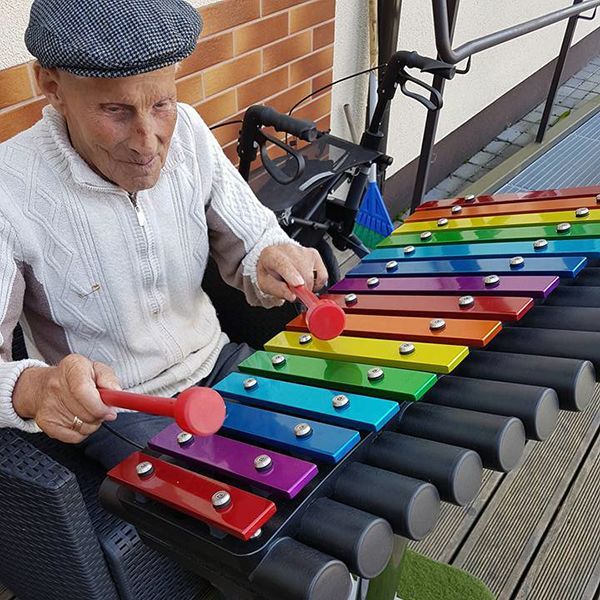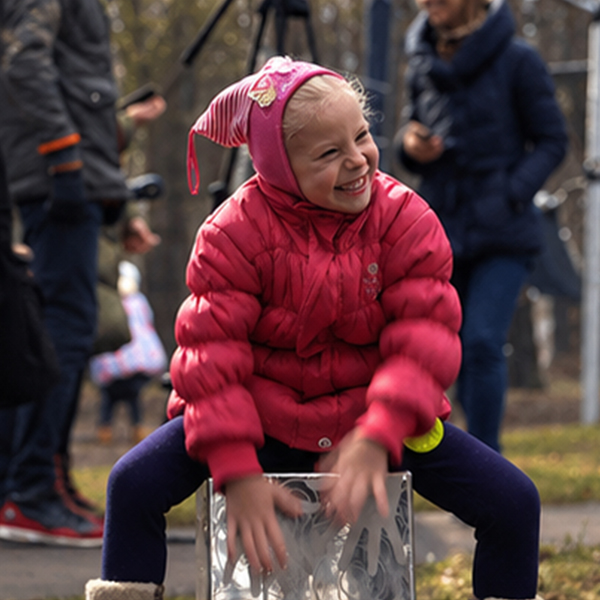
When the temperature drops, outdoor learning doesn’t have to stop. In fact, winter can offer children a completely different environment to explore, full of new sounds, sensations and opportunities to move, create and play.
Outdoor music gives children another reason to pull on their coats and head outside, combining movement, creativity and learning in an activity that can be enjoyed throughout the colder months.
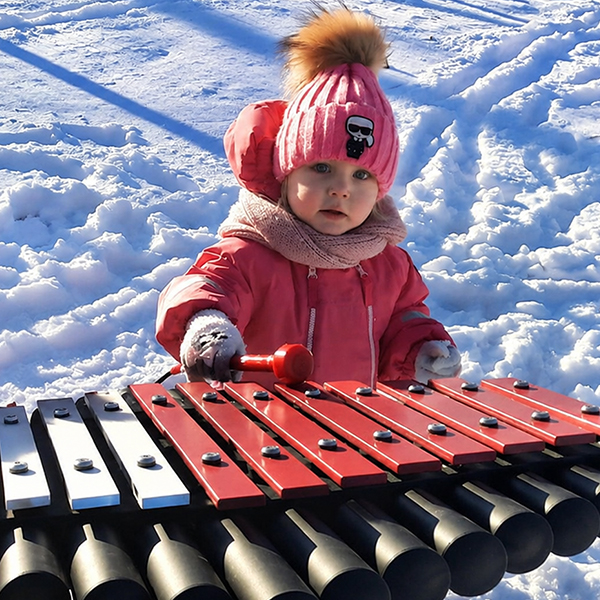
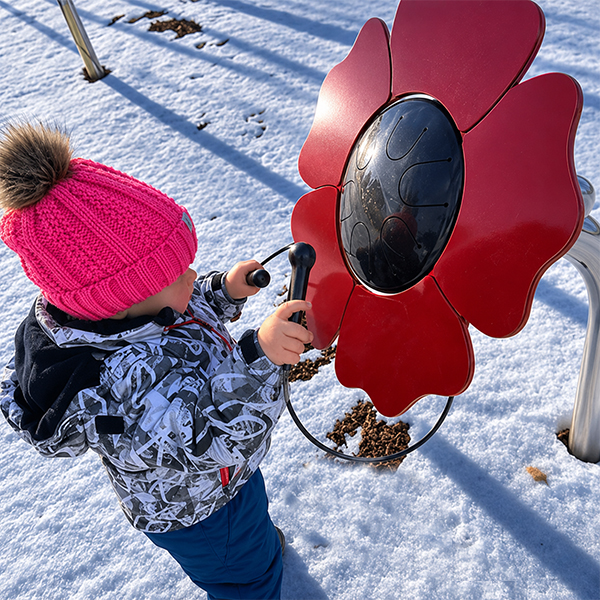
And because Percussion Play outdoor musical instruments are designed to withstand the elements and remain outdoors year-round, musical play doesn’t need to be saved for sunny days.
Winter can be a wonderful time to make some noise.
Music is naturally active. Children can strike, tap, listen, move, sing, dance and play together, engaging their bodies as well as their minds.
Take music outside and there is even more freedom to explore.
Outdoor musical play can encourage children to:
For children who find sitting still for long periods challenging, music also offers an opportunity to learn through doing, moving and experimenting.
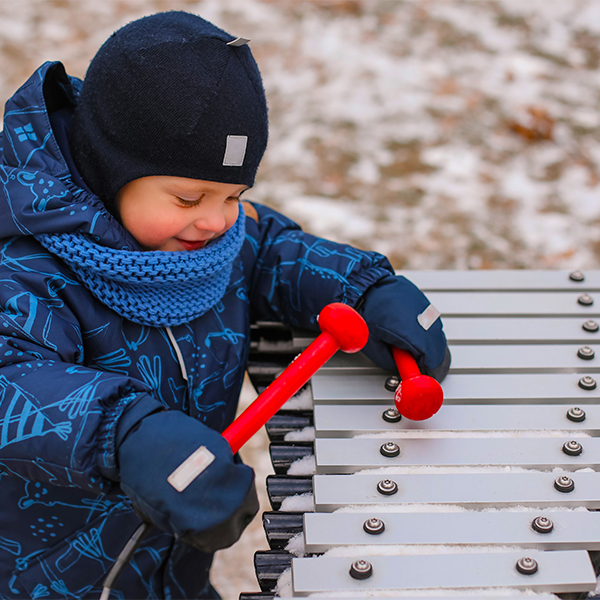
There is something wonderfully physical about making music outdoors.
Reaching, striking, tapping and moving between instruments gets the whole body involved. Children might create a rhythm and march to it, copy a friend’s musical pattern, move between different notes or invent actions to accompany different sounds.
During the colder months, active musical play provides a great reason to keep moving and make the most of time outdoors. It doesn’t have to be a formal music lesson either. A simple rhythm can quickly become a game, a dance, a musical conversation or the beginning of an entirely new composition.
Outdoor music can also open the door to learning far beyond music itself.
Young musicians can count beats, identify and repeat patterns, investigate high and low notes, explore how different sounds are created or experiment with what happens when they strike an instrument in different ways.
Add words or a story and literacy becomes part of the experience. Introduce movement, patterns and counting and mathematical thinking comes into play. Ask children to investigate vibration, sound or materials and you have opportunities for scientific exploration too.
The result is an engaging approach to STEAM learning, where Science, Technology, Engineering, Arts and Mathematics can overlap naturally through curiosity and play. Children may simply think they're making music. Along the way, they're observing, predicting, counting, listening, experimenting and problem-solving.
One of the advantages of having musical instruments permanently available outdoors is that the learning doesn’t have to end when a planned activity does.
An adult might introduce a rhythm, song or musical idea, but children can then return to the instruments independently. They can repeat what they have learned, experiment with it, change it or create something completely new. There doesn’t have to be a right answer or even a "right" tune. What happens if you play this note instead? Can you make the rhythm faster? Can a friend copy it? What happens when several people play together?
Giving children opportunities to investigate questions like these can encourage curiosity, confidence, creativity and problem-solving while putting them in control of their musical experience.
For Early Years settings, this also makes outdoor musical instruments a natural addition to continuous provision, allowing children to revisit ideas and consolidate learning through self-directed play.
Winter itself can provide plenty of musical inspiration.
Ask children to stop and listen. What can they hear?
The wind moving through trees. Rain falling. Birds calling. Footsteps on wet leaves. The sounds of people moving around the playground.
There are no correct answers, which is precisely what makes activities like these so valuable. Every child can listen, interpret and respond in their own way. Music becomes a way to explore the natural environment while encouraging imagination and self-expression.
Having permanent musical instruments outdoors also removes some of the barriers to spontaneous music-making. There are no instruments to carry outside, no complicated setup and no need to pack everything away again when the activity is over. Children can encounter music as part of their everyday outdoor environment.
At Percussion Play, our outdoor musical instruments are created specifically for permanent outdoor installation, giving schools, nurseries, parks and other settings the opportunity to make music accessible throughout the seasons.
That means a musical activity started with an adult in the morning could be revisited independently later in the day. A rhythm discovered by one child could inspire another. An instrument might become part of a game, story or imaginative adventure.
Music becomes something children can discover for themselves, rather than something that only happens during a designated lesson.
Grey skies, muddy playgrounds and chilly mornings don’t have to mean retreating indoors.
With appropriate clothing and sensible planning, the colder months can offer rich opportunities for children to move, explore, experiment, and create outdoors.
Outdoor musical play adds another dimension, bringing together music, movement, creativity, learning and self-expression in an activity children can return to throughout the year.
So, rather than putting outdoor music on pause until spring:
Wrap up warm. Step outside. Make some noise.
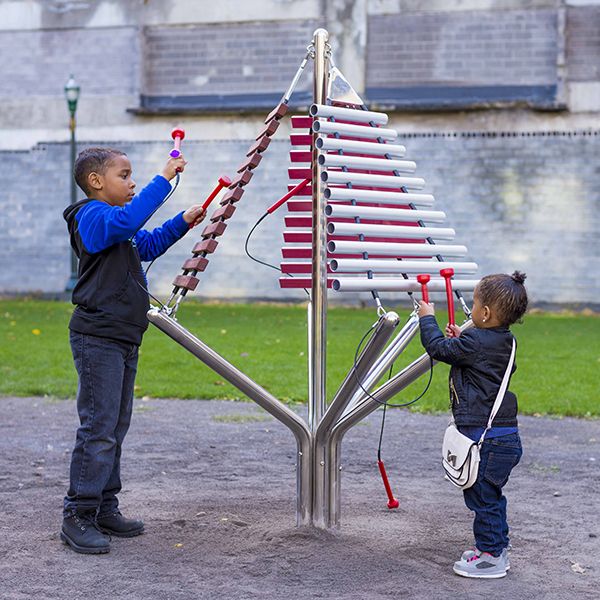
Tutti combines aluminium, GRP and hardwood notes in one striking outdoor instrument, creating rich sounds and collaborative musical play.
Sansa-Rimba combines thumb piano inspiration with marimba-style play, creating an accessible outdoor instrument for musical exploration.
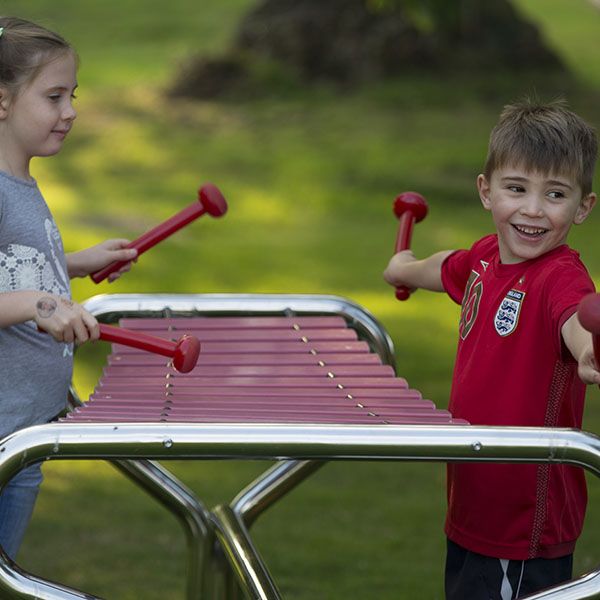
Outdoor Marimba with rich, warm tones and space for up to four players. Ideal for parks, schools, gardens and inclusive play spaces.